

A good Barbell is the centrepiece of a home gym setup. They give you versatility for all types of lifting, squats, presses, deadlifts and everything inbetween. They offer a true foundation for progressing in your home gym, whilst working toward any wellness goal.
When it comes time to choose YOUR barbell, which one is going to truly serve you and your space the best? Lets look into the different types and comparisons to give you precise information to help you make the best decision.

Xpeed X-Series Chrome Olympic Barbell
$449.00
/
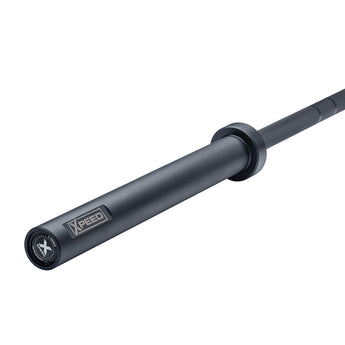
Xpeed X-Series Black Olympic Barbell
$449.00
/
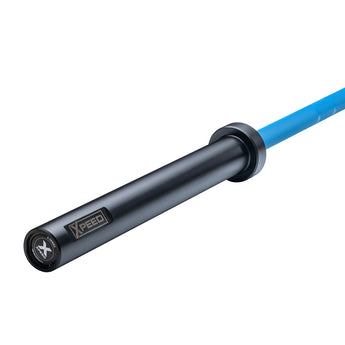
Xpeed X-Series Blue Olympic Barbell
$449.00
/

Xpeed X-Series Red Olympic Barbell
$449.00
/

Xpeed P-Series Chrome Olympic Barbell
$349.00
/

Xpeed P-Series Black Olympic Barbell
$349.00
/

Xpeed D-Series Chrome Olympic Barbell
$249.00
/

Xpeed D-Series Black Olympic Barbell
$249.00
/
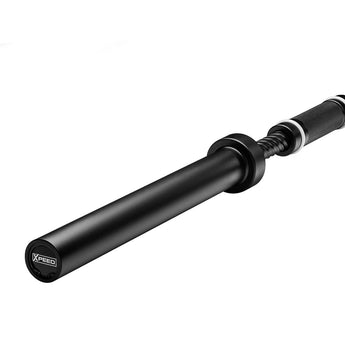
Xpeed Revolution Olympic Barbell
$700.00
/

Xpeed 15kg Training Olympic Barbell
$349.00
/

Xpeed Open Trap Bar
$400.00
/

Xpeed Multi Grip Hex Trap Bar
$400.00
/

What is an Olympic Barbell?
Oly barbells are the pinnacle when it comes to standards in weightlifting and strength training. They’re designed to hold Olympic Rubber, Bumper or Competition Bumper plates.
They feature a 28mm shaft and 50mm rotating sleeves.The sleeves rotate thanks to bushings or needle bearings, which reduce torque on your wrists and elbows during explosive lifts like cleans, snatches and jerks. This smooth rotation also helps with the big 3 powerlifting movements; squats, bench presses and deadlifts.
They’re built to handle serious weight, often upwards of 600kg and are made with high tensile steel for durability. Olympic bars also have a textured grip called ‘knurling’, this is strategically placed along the shaft of the bar to give you secure hand placement. Olympic barbells are a long-term investment, especially if you’re chasing strength, performance and versatility.

What is a Standard 25mm Barbell?
The traditional 25mm “standard” barbell is generally a more affordable option. It has a 25mm shaft with fixed 28mm sleeves suitable for standard weight plates.
These bars are usually shorter in length, which can make them easier to store and manoeuvre in smaller spaces. Load capacity is lower, generally under 200kg, making them better suited for beginners, casual strength training, or rehabilitation work.
They don’t have the same sleeve rotation as Olympic bars, which means they’re not ideal for high-speed lifts, but they still work well for basic exercises like curls, presses, rows and light squats.
What about specialty Barbells?
We truly believe the Olympic barbell is everything you need to make great progress in performance and strength. However, there are some unique specialty barbells that can support your training, elevate your progress and give you a new lifting experience.
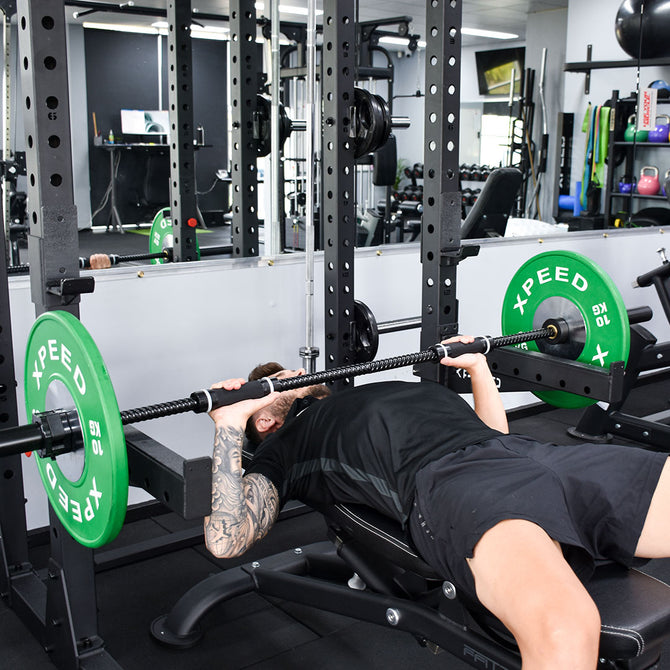
- The Xpeed Revolution Olympic Barbell - It's a first of its kind barbell featuring two knurled handles that glide along the threaded axis of the barbell shaft. The gliding that these handles provide, allow you to take your exercises through a full range of motion creating more strength within your muscles from different angles.
- The Open Trap Bar - One of the main benefits of using a Trap Bar is that it places less stress on your spinal extensors during the lift as it brings the weight closer to the midline of your body. As a result, you’re able to generate more power from the start of the movement.
- The Olympic Swiss Bar - This versatile multi grip barbell is great for a variety of exercises, including presses, rows, and curls.One of the main benefits of the swiss bar is that it decreases the stress placed on the wrists and shoulders during pressing, whilst at the same time increasing tricep activation.
- The Multi Grip Cambered Barbell - The cambering of the barbell allows for a greater range of motion, making it ideal for those looking to add more power to their lifts. Why? Lifting through a full range of motion will result in better muscle balance, good activation of the working muscles, joint stability and overall better movement quality.

Which Bar is Right for You?
Before looking at speciality barbells, we always recommend a straight barbell to kick things off and get you comfortable with the foundational lifting patterns.
Choosing between an Olympic barbell and a 25mm bar comes down to your goals, budget and training style. If you’re serious about strength training, lifting heavy, or learning Olympic lifts, go Olympic. If you’re training casually, have limited space, or are on a budget, start with a 25mm bar and build from there. Remember, it’s not about what’s “better” overall, but about what’s better for you right now.
To Finish
Your barbell is the backbone of your training setup. Whether you choose the versatility and performance of an Olympic bar or the simplicity of a standard 25mm, the best bar is the one that keeps you lifting consistently and safely.
If you’re ready to explore your options, check out our Olympic Barbell Range and Standard Barbell Range to find your perfect match.
Specialty Barbells
Check out some some specialty barbells below for your training


Xpeed D-Series Olympic Curl Bar
$149.00
/

Xpeed P-Series Olympic Curl Bar
$249.00
/

Xpeed Olympic Swiss Bar
$250.00
/

Xpeed Olympic Hex Trap Bar
$350.00
/

Xpeed Multi Grip Cambered Barbell
$350.00
/

Xpeed Bent Barbell
$350.00
/

Xpeed Cambered Row Barbell
$350.00
/
Xpeed Multi Grip Hex Trap Bar
$400.00
/

Xpeed Safety Squat Bar
$400.00
/

Xpeed Chrome Safety Squat Bar
$400.00
/