

For anyone new to exercise, walking into a gym or browsing a fitness equipment store; the experience can often feel overwhelming. Free weights, racks, cable machines, resistance bands, benches… where do you even start?
Here’s the good news: strength training for beginners doesn’t require complexity. What it does require is the right equipment, proper technique, and a clear understanding of what will help you progress safely and effectively.
At Fitness Warehouse, we’ve helped tens of thousands of customers, from first-time exercisers to professional athletes, build strength-training setups that match their goals and experience level. This comprehensive guide breaks down the best strength training equipment for beginners, why each piece matters, and how to create a complete starter setup that grows with you over time.
Why Strength Training Matters Especially for Beginners
Before diving into equipment, it’s important to understand why strength training is so beneficial, especially early in your fitness journey.

Benefits of strength training for beginners:
- Increases muscle mass and improves body composition
- Boosts metabolism, helping burn more calories at rest
- Strengthens bones and reduces risk of osteoporosis
- Improves posture, joint health, and daily movement
- Increases mobility, stability, and functional strength
- Reduces injury risk across all activities
- Reboots confidence through measurable progress
The earlier you start building strength, the faster you unlock these benefits.
Still, the biggest challenge beginners face is knowing what equipment to use and why. That’s where this guide comes in.
The 9 Essential Equipment Categories for Beginners
Below, we break down the best strength training equipment for beginners, including what each piece does, why it matters, and what to look for when buying.
This list is based on industry standards, fitness science, and 40+ years of expertise as a leading fitness equipment provider.

1. Dumbbells (Beginner-Friendly Foundation)
If you could pick only one piece of strength training equipment as a beginner, dumbbells would be it.
Why they’re perfect for beginners:
- Simple to understand
- Easy to progress weight over time
- Safe when training alone
- Versatile for full-body workouts
- Compact and ideal for home gyms
What to look for:
- Anti-Slip handles
- Range that grows with you (1 - 50kg)
- Durable construction
Why Fitness Warehouse recommends them: They provide the most value per dollar and allow complete progression for months or even years before needing to upgrade.

2. Resistance Bands (The Most Underrated Beginner Tool)
Resistance bands are lightweight, affordable, and incredibly powerful when used correctly.
Why beginners should use them:
- Increase stability and control
- Protect joints during early strength development
- Add variable resistance (harder as you stretch)
- Excellent for warmups and mobility work
- Highly portable
Best uses:
- Glute activation
- Shoulder warm-ups
- Assisted pull-ups
- Band rows and presses
- Rehab-style strength building
- Slow-controlled movement training
Bands are often used by physical therapists because they strengthen stabilizers muscles which beginners often lack.
3. Kettlebells (Strength + Conditioning in One Tool)
Kettlebells are ideal if you want strength training and cardio benefits.
Why they’re beginner-friendly:
Build grip strength
Improve core stability
Train power and explosiveness safely
Versatile for both controlled lifts and dynamic movements
What weight should beginners start with?
Women: 8–12 kg (18–26 lbs)
Men: 12–16 kg (26–35 lbs)
(Weights vary depending on individual strength; Fitness Warehouse team members can help choose the ideal starting point.)

4. Adjustable Bench (Essential for Upper-Body Training)
A proper bench unlocks dozens of new movements.
Why beginners need an adjustable bench:
Allows incline, flat, and decline positions
Supports dumbbell and barbell exercises
Improves training safety and mechanics
What to look for:
Weight capacity of 270kgs (600+ lbs)
Adjustable positions
High-density padding
Stable, non-wobbly frame
A bench upgrades your workouts immediately and is a cornerstone of any beginner strength program.


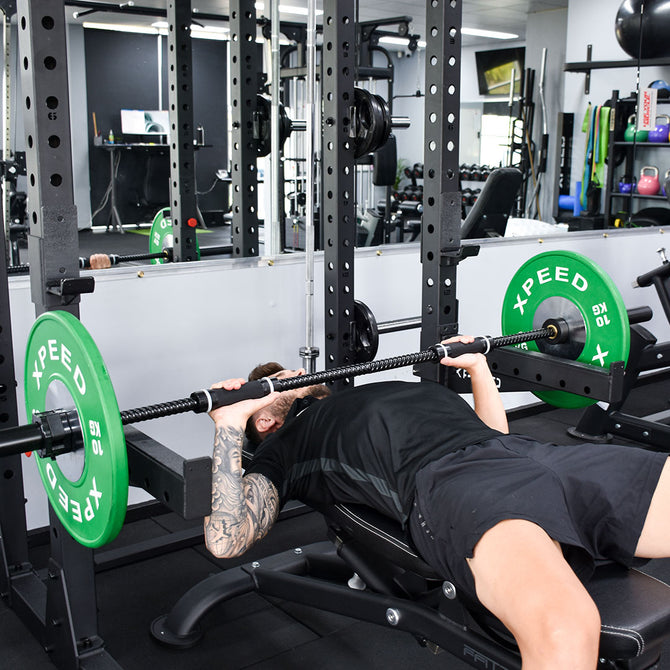
5. Barbell + Plates (When You’re Ready to Level Up)
Many beginners start with dumbbells, then graduate to barbells once they build confidence.
Why a barbell is worth adding early:
- Allows progression into squats, deadlifts, and bench press
- Builds total-body strength
- Offers precise load increments
- Ideal for long-term training
Types of barbells:
- 7' Olympic barbells (standard for strength training)
- Technique barbells (lighter, great for beginners)
- Trap/hex bars (excellent for beginner deadlifters)
- Specialty Barbells (For more unique movement patterns)
Paired with bumper plates or iron plates, this setup becomes the backbone of serious strength training.
6. Power Rack or Half Rack (Safety + Versatility)
Once a beginner progresses to heavy lifting, a power rack or half rack becomes essential.
What a rack allows you to do safely:
Squats
Bench press
Overhead press
Rack pulls
Pull-ups
Barbell rows
Accessory movements via attachments
Why beginners benefit:
A rack keeps you safe without needing a spotter, allowing progression with confidence.
What to look for:
Sturdy steel construction
Westside hole spacing (for precise adjustments)
Pull-up bar attachment
Safety straps or pins
Plate storage options
Fitness Warehouse offers both beginner-friendly half racks and commercial-grade full racks depending on your needs.


7. Smith Machine (Added Stability for New Lifters)
Not all beginners are comfortable with free weights right away. A Smith machine offers guided assistance.
Why beginners like Smith machines:
- Fixed bar path improves safety
- Ideal for learning movement patterns
- Great for hypertrophy (muscle growth)
- Allows solo training confidently
It’s not a replacement for free weights, but a fantastic supplement to build strength safely.
8. Cable Machine or Functional Trainer (Total Versatility)
Functional Trainers & Cable machines allow constant tension on the muscle, which helps beginners learn control and form.
Benefits for beginners:
Low joint stress
Easy to adjust
Excellent for isolation training
Great for rehab or mobility work
Supports dozens of exercises
This is one of the most versatile pieces of equipment for any level of lifter.

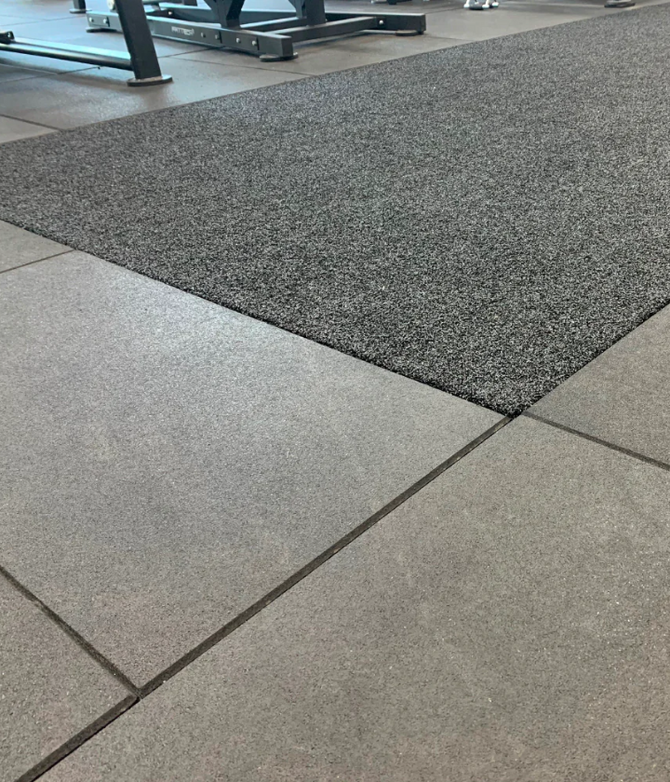
9. Flooring, Mats & Accessories (The Overlooked Essentials)
A complete beginner setup isn’t just about equipment, it’s about the environment.
Why proper flooring matters:
Protects floors from weights
Improves traction
Stabilizes your lifting platform
Reduces noise
Accessories beginners should consider:
Lifting straps
Clips/collars
Foam rollers
Mobility tools
Chalk (if allowed)
These small items increase safety, comfort, and training efficiency.
to see gym flooring click here

How to Choose the Right Equipment for Your Goals
Your training goals determine which equipment will help you most.
If your goal is fat loss:
Use dumbbells, kettlebells, and bands for metabolic strength circuits.
If your goal is muscle building:
Add an adjustable bench, barbell, cable machine, and dumbbells.
If your goal is overall fitness:
A mix of free weights and functional equipment works best.
If your goal is maximum strength:
Invest in a power rack, barbell, plates, and solid flooring.
No matter the goal, starting small and progressing over time is the safest and most effective approach. If you're feeling a bit overwhelmed, please reach out we are more than happy to assist you.

Common Beginner Mistakes to Avoid (Expert Tips)
After working with thousands of first-time lifters, Fitness Warehouse has identified common pitfalls and how to avoid them.
Mistake 1: Buying equipment you don't need yet
Start with essentials. Add advanced pieces later.
Mistake 2: Choosing weights that are too heavy (or too light)**
We can help select appropriate starting weights.
Mistake 3: Overlooking safety features
A rack, bench, or barbell without proper safety components can create preventable risks.
Mistake 4: Poor-quality equipment
Cheap equipment bends, breaks, or becomes unsafe. Strength training requires reliability.
Mistake 5: Ignoring technique
Equipment matters, but form matters more.
At Fitness Warehouse, we walk beginners through setup, technique, and long-term planning to ensure safe, sustainable progress.
Final Thoughts: Start Simple, Stay Consistent, Choose Quality
The best strength training equipment for beginners isn’t about having a huge home gym, it’s about selecting the right tools to support foundational movements, safe form, and steady progress.
Whether you’re building a small starter setup or a premium home gym, the team at Fitness Warehouse is here to help you choose equipment that matches your goals, experience level, and long-term plan.
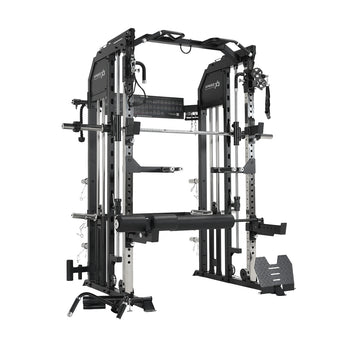
Xpeed Quantum X3 All-In-One Trainer
$3,700.00
$2,999.00
/
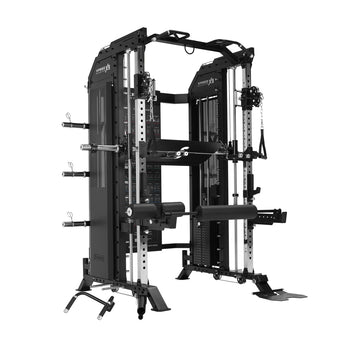
Xpeed Quantum X9 All-In-One-Trainer
$6,000.00
/
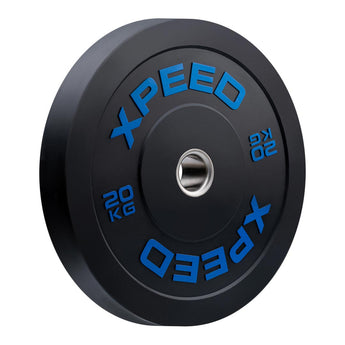
Xpeed Bumper Plates
From $60.00
/

Xpeed Fractional Plates Set
$230.00
/
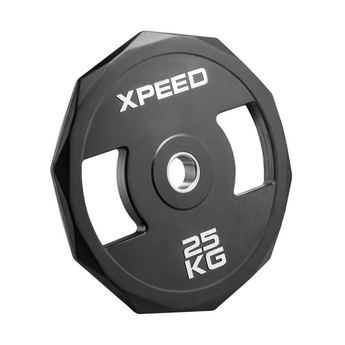
Xpeed Olympic Rubber Plate
From $6.90
/
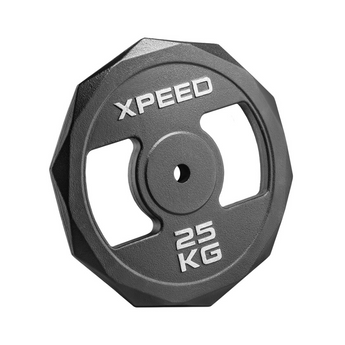
Xpeed Standard Weight Plate
From $6.25
/

Xpeed X-Series Red Olympic Barbell
$449.00
/

Xpeed D-Series Black Olympic Barbell
$249.00
/

Xpeed P-Series Chrome Olympic Barbell
$349.00
/
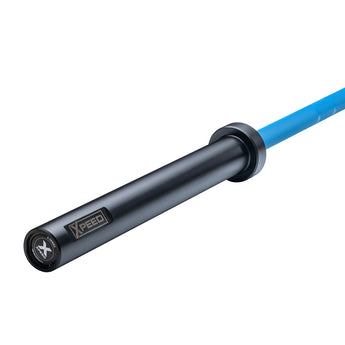
Xpeed X-Series Blue Olympic Barbell
$449.00
/
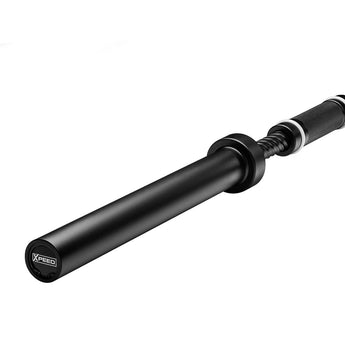
Xpeed Revolution Olympic Barbell
$700.00
/

Xpeed X-Series Chrome Olympic Barbell
$449.00
/